Varicose Veins/Venous Insufficiency

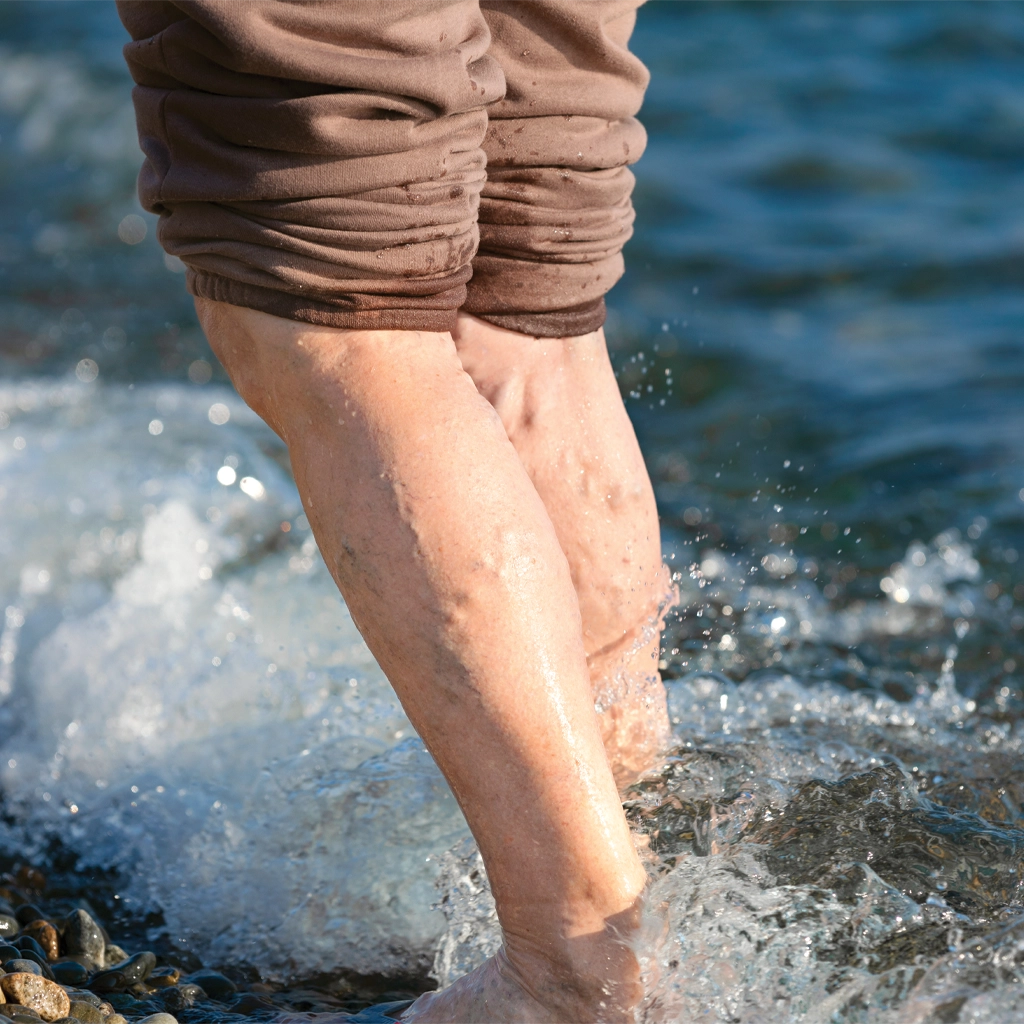
Varicose veins are swollen, twisted, enlarged veins that rise above the surface of the skin, usually on the legs. That’s because standing and walking upright increases the pressure in the veins of your lower body.

For many people, varicose veins and spider veins — a common, mild variation of varicose veins — are simply a cosmetic concern. For other people, varicose veins can cause aching pain and discomfort. Sometimes varicose veins lead to more serious problems.

If you are seeking treatment for varicose veins, Champlain Valley Vascular can help. We start with a diagnostic exam, including looking at your legs while you’re standing to check for swelling.

We may also perform an ultrasound test to see if the valves in your veins are functioning normally or if there’s any evidence of a blood clot. With this noninvasive test, a technician runs a small hand-held device (transducer), about the size of a bar of soap, against your skin over the area of your body being examined. The transducer transmits images of the veins in your legs to a monitor, so the technician and the doctor can see them.
Conservative Treatment

Self-care — such as exercising, losing weight, not wearing tight clothes, elevating your legs, and avoiding long periods of standing or sitting — can ease pain and prevent varicose veins from getting worse.

Wearing compression stockings during the day is often the first approach to try before moving on to other treatments. They steadily squeeze your legs, helping veins and leg muscles move blood more efficiently. The amount of compression varies by type and brand.

Compression stockings can be purchased at most pharmacies or medical supply stores as well as online. Prescription-strength stockings are also available, and may be covered by insurance if your varicose veins are causing symptoms.

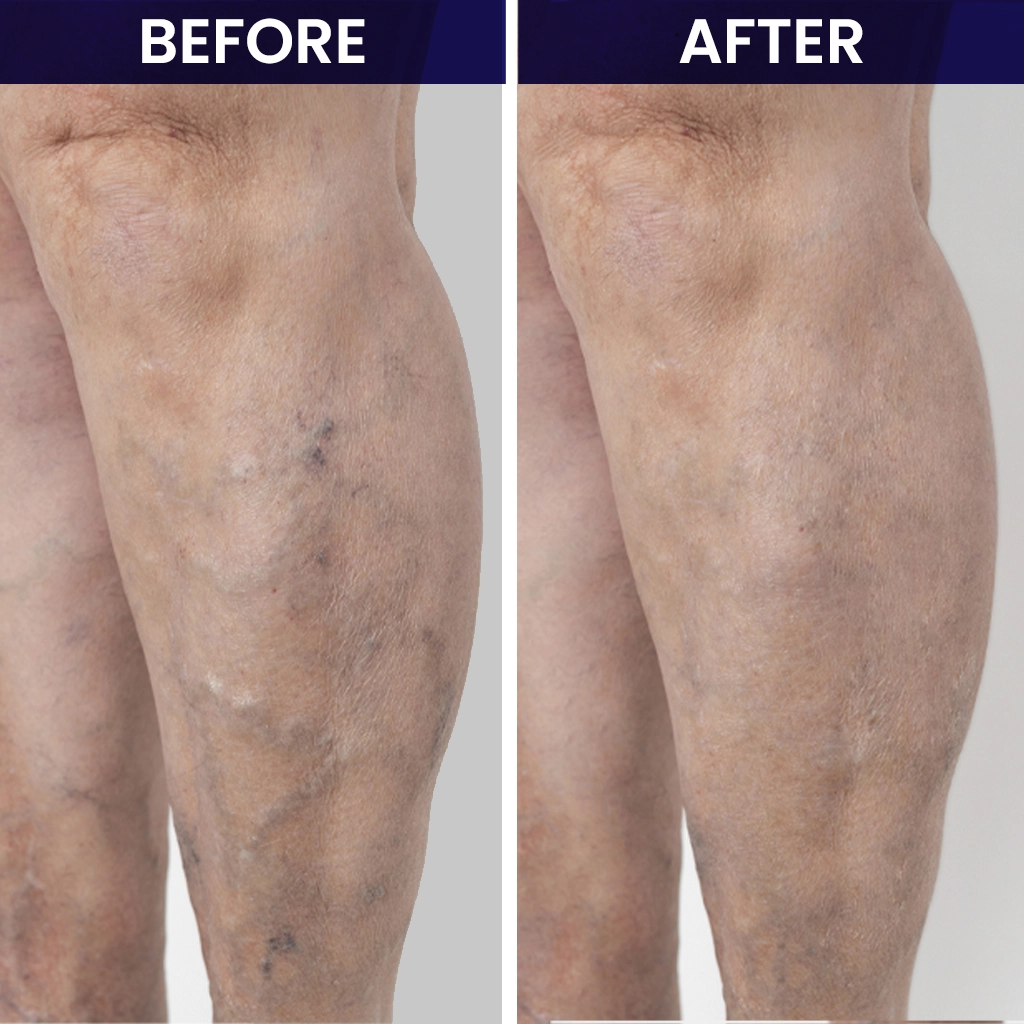
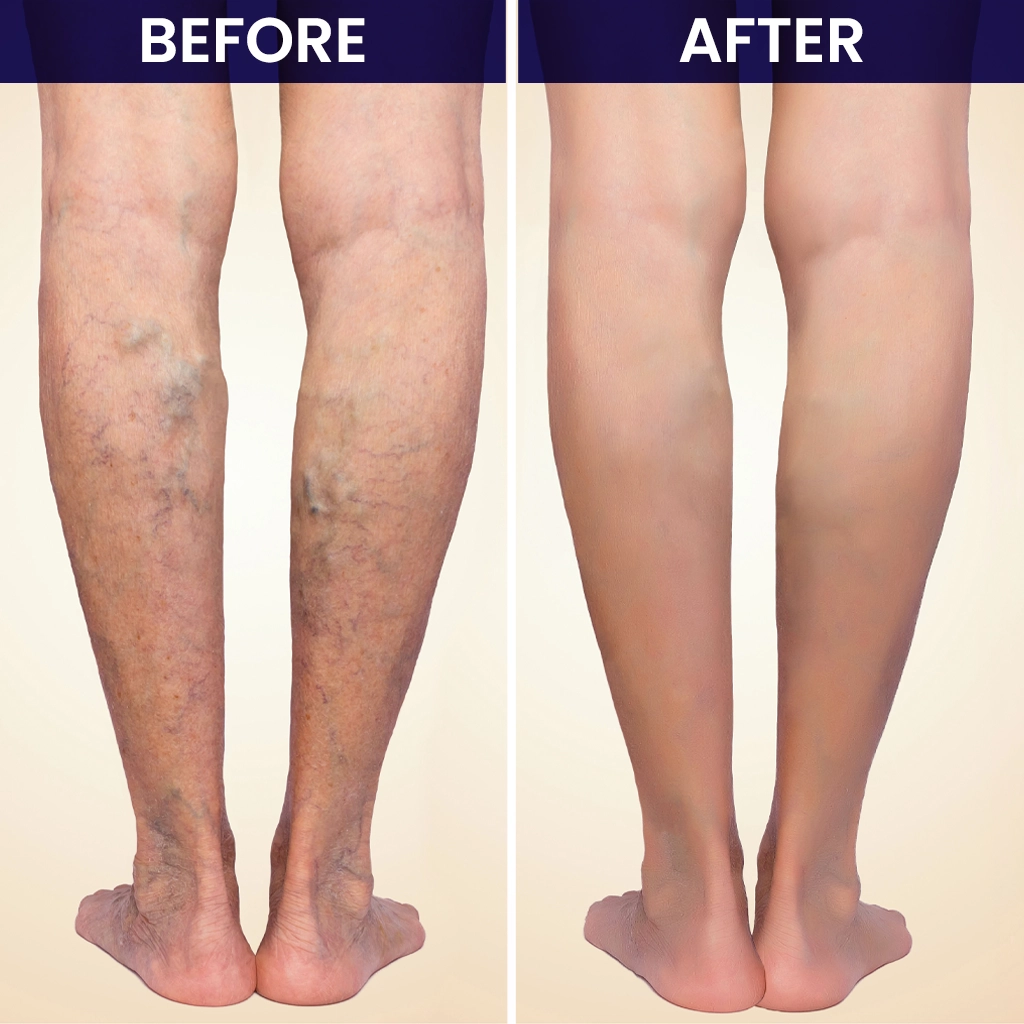
before and after vein treatment

Additional Treatment Options

If you don’t respond to self-care or compression stockings, or if your condition is more severe, we offer the following varicose vein treatments:

Radiofrequency Ablation

For large varicose veins, Champlain Valley Vascular uses ClosureFast™ radiofrequency ablation. The benefits of this technique include faster relief of symptoms, less pain and bruising and lasting results compared with other minimally invasive techniques, such as laser. This treatment is clinically proven with a 91.9% success rate after 5 years.

With radiofrequency ablation treatment, the doctor inserts a thin tube (catheter) into an enlarged vein and heats the tip of the catheter using radiofrequency energy. As the catheter is pulled out, the heat destroys the vein by causing it to collapse and seal shut. Over time, the varicose vein shrinks and is absorbed by the body. Blood is naturally re-routed through other, healthy veins.

High ligation and vein stripping

High ligation and vein stripping are surgical procedures used to treat varicose veins caused by significant venous reflux, most commonly involving the great or small saphenous vein. High ligation involves tying off the affected vein near its connection to the deep venous system, while vein stripping involves removing all or part of the diseased superficial vein. Removing the vein won’t adversely affect circulation in your leg because veins deeper in the leg take care of the larger volumes of blood. These are rarely used procedures and are mostly performed on an outpatient basis.

Microphlebectomy

Microphlebectomy, also known as ambulatory phlebectomy, is a minimally invasive procedure used to remove varicose veins through tiny incisions in the skin. It is performed to relieve symptoms such as pain, aching, heaviness, swelling, and discomfort while also improving the appearance of the legs. This technique is particularly effective for treating large, raised, twisted varicose veins that are close to the surface of the skin. It is an excellent treatment option for visible branch varicose veins.

Skip to content